It wasn't the beluga, or the sevruga, or the ostreiga, or the russian standard platinum with beef tongue salad and pickled herring, no, it definately wasn't any of htat, it was the beer afterall. Shit... but I'll get to that later.
I started a post the day before, a rather lengthy one, that vanished, like tears in rain, when I tried to post. This wireless line in the hostel is as much a curse when you try and rely on it, as it is a blessing if and when it actually chooses to work. So I think it was this past Sunday when I went to Peterhoff with my folks. I was the other liason along with Sasha, who took the tour group from the program to Peterhoff. I was somewhat excited to go down there as I'd never quite been able to make it inside the castle which was destroyed and brought to complete ruin during WWII. The russian government, having saved as much of the interior pieces, art, tapestry, wall paper and hand carved oak panels from the library, used these basic materials to rebuild it and the gravity fountains all along the spill way that drains into the bay of finland. The castle's interior is a hodge podge of blue silk wallpaper, turkish motifs, chinese opium themed dens with rich lacquered paints, a room with 365 portraits of women meant to show off all the styles of the day and Peter the Great's original Oak Study. The castle is known as the versailles of Russia, albeit much smaller.
Now some of the frustrations: american travellers, in the bathroom, I over heard "this shit is so gaudy! they love that gaudy shit don't they?" I wanted to turn to the black knee highed and shorted speaker and screamm "well what would you call vegas you inbreader?!" But i didn't, I just wished that he would fall into the bay of finland and vanish from this planet leaving the tour groups to get in just a bit smaller. The palace gardens are my favorite, walking amonth the various sprays of water, and the long tree lined pathways out to the ocean is a treat, even if you're sharing it with tens of thousands of other people.
Finally, after a bite to eat, a little more wandering, it was time to head back, and this is when I totally felt like crap, well, most of the day was an uphill battle. I had only slept 2 hours the night before. I can hardly, at this point, remember what the hell we were doing that kept me up to the wee hours of the morning, oh wait, I remember now, we were saying goodbye to Nathan. He left back to New York on Sunday morning. Nathan recently got a jo as an editor at the rolling stone and as such couldn't stay for more than a week. It was sad to say goodbye, but hey, I'll see him in the big apple for sure. At the very least, I got to speak to his wife, Kelly McEvers of NPR broadcasting fame, on the phone. She was in Armenia, a little incapacittated by the local cognac, can't blame here, that's good stuff.
When the bus pulled into our final destination back at number 6 Kazanskaya, Sasha gently woke me up and I felt a wave of diziness come over me. I warbled, said goodbye to the folks and then headed back to the hostel to get some shut eye. This plan worked out, I went to bed and slept for 6 hours. I woke around 11 at night, changed my sweat soaked shirt, have I mentioned this is the hottest year I've seen here? Its only rained once since I arrived, its in the low 80s right now and muggy as all hell. Tomorrow will be hotter, and then friday about the same as today, with some cooling and rain, finally, on saturday. That'll be nice to get the contrast to this blazing sun. I'm very much missing my Richmond fog bank... can someone please send me some fog from back home? So it was off to dinner at Fasol around the corner (fasol, in Russian means bean, like a kidney bean). Albeit the name of the restaurant is somewhat provinncial, evoking something of the heartiness of country food, its anything but. The menu is eclectic and the kitchen serves everything from russian fare to sushi and Italian. I settled for a soup with cabbage and duck and for the main course it was all about roast liver and potatoes, a pot of mint tea (which I'm thinking about now) rounded out the experience. Seems to be a favorite of the young and hip, I notced that the waitress from Kafe Haus on Nevsky was eating sushi there, her mass of blonde tight curls pulled back, and the somewhat cheerful expression she had when she brought Mariya and I our cherry strudel, was replaced with a look of concentration.
The rest of the night was supposed to be an alcohol free kind of experience. I had planned on hanging out at the hotel, avoiding my cell phone and generally doing little of anything, well these plans went south just as I sat down to edit my manuscript a bit... in comes Tom with a sack of beers and a bottle of vodka. We drank and talked till four in the morning at which point he lifted himself and sauntered off to bed. I was glad for the company, but more glad for being able to fall asleep. I managed another five hours, starting around 5 or 6 in the morning.
The next day, hm... Monday... there was an open mic reading at the mayakovsky that I mc'ed. After the reading I took a large group of participants to Uzbeki. The belly dancer, of my, she turned some heads and I watched as certain eyes shrank and slightly dialated to the rhythm of her girating hips. I, a veteran of caravan sarai, was equally moved, butt I think I just had way to much fun watching the newly initated succumb to her charms. Ofcourse Tony had to go and ruin it, that little shit. The dance is one of seduction, its a beautiful thing to watch, its not a fucken strip tease! When she came up around him, he stood from his chair and began to freak her waist, as he barely comes up past it. We all yelled for him to sit down. I really wish he hadn't have gone with us, I would've been ar happier without him there.
So after dinner I made my way back to the hotel to drop off gear (camera), and suit up like some cowboy for "the night watch". Jenya met me at the gribojedeva canal where we set out for Avla Bar and an eventual loop to datcha. There was a small band of merry SLSers watching a match on the wall that was being fed by a projector from the back of the open air seating. We sat and talked, when Tanya came up, I took her by the hand and we went to Datcha for a quick peak in to see which of our less than bright participants went to try and score with wasted russian. The joint, it and Fidel's, were empty. On the way back I told her that I had lost a contingent, two people, on the walk back from uzbeki. They chose to go to Purgo (purgatorio) a bar where every night is new year's eve somewhere on the Fontanka. I haven't been there yet, nor do I realy have a desire to see it. I handed her the remained of my cigarettes and sent her on a mission to fish Tony and Uday out from purgatario. She truly is an angel that way, she is she is she is.
Mission successful, and after another bottle of water, Tom had the bright idea that maybe "we" he Stacy, Jenya and I, should go to Datch for a quick vodka, a dance or two, and then we can split while its early. Well guess what, not happening... no the leaving early part at least. We did have that vodka, then another, then we were dancing, as Swafford arrived with nancy and wendy, to the B52s and Jet, along with something other... that I can't remember. Jenya and I stopped after two shots and a few dances. Wendy was already 6 sheets to the wind when she arrived, and wound up dancing on a table, a low table mind you, but the ceiling isn't that high and she stands at 6'1" without heels, so you get the picture. After a while Jenya began to feel guilty that we were shirking our responsibility, I didn't think so, we were preempting what I knew would happen that night, everyone would wind up at datcha and fidel's. This did come to pass mind you. We left Datch and went for a walk holding hands and walking very close to pretend we're a couple. The cops are less likely to stop you if you engage in something like that, they were driving by in groups of 2 and four every five minutes, looking to get paid. This is something I detest about this country, really I do. We cleared the guantlet, get to the beer garden, that we received an SMS message about was a haven for some participants and no one is there. We walk down Kazanskaya to check The Office, its empty too, and then we see, as we're approaching, a group of our participants heading toward Datcha... AHA! They run away from us, namely Tony, when I call his name, I really was thinking evil things at this point, cool man cool... as he always says. We caught up with them onthe griffon bridge, the same one we told them to stay the fuck off of at night. They were hanging out, granted there were six of them, its stupid, to hang out on the bridge, yet there they were. How you like them apples? Jenya and I shoed them off the bride, went back to Datcha and began a long night of standing between Fidel's and Datcha, watching them run back and forth until I finally through in the towel around four thirty in the morning. I called Parker and said that three morons were left and they weren't leaving despite my best efforts to offer them trips of safe passage back along with meals. "Fuck em" was our general thought at that point. Jenya and I went to Laima with Morgon, also drunk, shushing him when cops drove by so they wouldn't hear his English while she and I bantered in Russian. He couldn't have been more looking like a foreigner if he tried, white shorts, an orange polo shirt, and a timbuktu bag... hello... oh but I forgot to tell you the best part... I took Wendy back to the Astoria.. its one of the 2 most expensive hotels in St. petersburg, and yes she has money... she was hammered and falling down in Datcha. One of my three problem children thinks he's being a gentleman by getting her a cab and sending her off in it alone. I see Dannny walking her out on the street, still wearing that black dress she wore to the opera earlier that night. I take hold of the situation, tell jenya I'll be back in 15 and tell Danny to fuck off as he's a moron thinking he can put her in a cab alone in this condition. After like 2 seconds of holding my arm out, a cab stops, says he wants 200 rubles for a round trip. I'm still feeling cheap, even though wendy's purse is stuffed with 1000 ruble notes, I get him down to 150, throw her in the back and off we go.
So the cabby asks me as we hit the Gribojedeva canal "Brother, you wouldn't happen to be rich in cigarettes?" I say yes to him in Russian and hand him 2, one for the way there and another for the way back. He laughs, thanks me and then picks up speed as we round Garoxiva... The Astoria comes into sight as St. Isaac's massive dome dominates the sky around the next bend. Its right across from the plaza of St. Isaacs, and is guarded by suited bell hops and guards, just like any other hotel that is filled nightly with business men, high end hookers and has free porn in every room. Wendy later told us it was almost exclusively man on woman anal. Go figure, a place for travelling business where prices are in Euro, like he grand hotel Europa on Nevsky, and they get that to boot. But I digress... the cabby looks at me and asks me where I'm from after I send Wendy into the lobby unharmed, but just slightly humiliated, and sans her 6k wedding ring, which I found out later that night, was given to Stacy, who later returned it to Wendy. I tell him that I'm from "sa-she-ah" or the USA, he laughs and asks me if all American women drink that way. I tell him no, only the memorable ones, he laughs again... and then tells me that there's a large population of Armenians in LA and that they are calling it Los Armenianos... I laughed, a lot, and then told him that my brother's wedding took place at an Armenian joint... so the legend was true.
That was that, went to bed around half past five in the morning, woke up around 10 to meet dad. The old man really wanted to go to Banya with me one more time, to really show me what it was like, just the two of us, without all the participants that came with last time. It was, in a word, something knocked me on my ass so quickly that I didn't see it coming. The purpose of banya is to penetrate the bone and organ substrate of the body with heat using the leafy brooms. If done incorectly you can burn the person receiving the bana, if done right, you feel as if you've been reborn. 3 times, that's all I could take before my head started getting a litle spinny, but not unpleasantly. 3 times, that's enough for a first go. There was another guy, with longish hair, in that Russian Orthodox style, could've been a priest for all i know, who arrived to be worked over from what I can only assume was a professional "parilchik". This guy had 6 brooms, wore clothing inside the 150 degree, celsius folks, "parilka" and had this guy on sweating left and right. He was a bright red before we left, and he wasn't done.
After banya it was back to meet mom at a georgian place where the sleepies hit me in a big way, they both laghed and after an earlyd dinner I went back to the hostel and lay down for a 2 hour nap. After the nap, refreshed, I rose and took a group of people over to the mayakovsky for a reading by Padget Powell & Jonathan Dee. Powell, well hell, he just rocks! His reading voice is too much... just too damn much.
After the reading there was the usual gathering and banter outside the library over where to go and what to do. I was definately not on night duty so I was left to my own devices. Wendy comes up to me with Stacy and Tom and says lets quietly sneak off, I'm going to treat you, for rescueing me... and so the four of us make our way to the grand hotel europa for what turns into a very expensive course of apetizers in the form of black caviar, herring, most of a liter of Russian Standard Platinum vodka, creme brule and the beef tongue "olivye". WOW! We all laughed heartily, I wasn't surprised to learn Wenndy was quite wealthy and lived on the upper east side in manhattan...so I didn't feel bad about letting her pay, quite the contrary, it was great, as I'd never shell out that much money for something that to me, is good, but way over priced, however, the experience of not one but multiple waiters standing hand and foot, at your every blink, is awesome.
After the caviar bar it was off to beer garden, where wendy bid us goodbye, a few pints, and friends later, I was charged with the purchase of beer for the mini hotel party to end all parties. I won't go into details, but here's the rub: tom is leaving today around 6pm on a train to moscow, he'll be back next wednesday while I'm in Brusels, for Cushman's wedding, the bachelor party is on Sunday, lord have mercy on our souls! To make things more complex, he's sprung, in a big way, and it breaks my heart to see a case of bad timing ruin this thing, cause she is too, but she has a thing back home, I really feel for the guy, its really making him miserable, as he's so in to her... so it was one last hoorah with american music and 30 some odd of our closest friends in the mini hotel with more beer than I can cout... yeah, this was the biggest, I have pics, they're all ugly and sorted kind of pale faced shaky cam daugerotypes, but man, was it a blast... that's where the headache is from... it sucks, but after writing this massive post, I can feel it starting to wear off. I'm going to put on the sunglasses and head to Zoom for a spot to eat, then to find Tom to say goodbye, and then my parents to also say goodbye as they leave for Samara (on the Kazakstann border, or near it) tomorrow...
shislivo!
Wednesday, June 21, 2006

Friday, June 16, 2006
SOTS Art

Komar & Melamid
Yesterday was a long and wonderful day punctuated by a trip back to the Banya with my parents and 19 some odd participants and staff. We took over the banya and experienced the joy of an incredibly hot room, oak and birch brooms for whipping and the best kvas that a russian ex-con can make.
I was looking forward to taking everyone to a cafateria not far from the banya which is just up the street from the museum (house) where Dostoyevsky died but alas it was no longer there. Fortune being what it was, we stumbled into "sheenok" a Ukranian restaurant (means puppy in Russian), that served amazing dumblings stuffed with sour cherries (vareniki s' vishniy). We ate and found ourselves even more tired than before, but being the troopers that we sometimes are, we made our way down to the fontanka canal and up to the Mayakovsky gallery for a lecture by Vitally Komar, one half of the soviet SOTS art movement that was happening at almost the same time as pop art took off her in the states.
What's the deifference between sots and pop you ask? Well it has to do with the society in which its rooted: american consumerasim vs. russian propoganda culture. Does this mean that Americans live out of the shadow of ultra nationalistic propoganda? No, not at all, however, what is most prevalent in our world is advertising and media. Warhols images of the Campbell Soup Can stands out as that mass market comodified pop art that attacks the banality of labels and media and, almost reappropriating it from its consumerists roots and, denying the dollar, and at the same time, completely worshipping money by taking an every day image and saying that this is art and its price tag is ever so much higher than the actual object represented. Russian media was about the state, a state that Komar said was more paranoid than the west and very touchy about the messages that artists put out and tried to convey to the soviet people. Sots art is a response and mockery to that culture and paranoia. Komar took the Campbell soup can and painted it in such a way that it was a rusted hulk, what it might look like in a thousand years. The projection into the future is nothing short of the soviety agenda that said things are bad now, but communism will make them better and they are always improving. The future, albeit bright and shinning in terms of the rhetotoric, is shown ironically in Sots.

Komar and Melamid as Lenin & Stalin
Komar had a slide show going that started with a picture of himwith warholl. There was a dialogue between these two groups of artists. Along with his own work he linked the massive soviety architecture that was emblamatic of the huge government and the might of the soviet regieme to American nationalist symbols. A small town in Siberia has the largest "head of lenin" in all of the former soviet union outside its central government office. That head, in its enormity has a particular resemblance to the head of Washington on Mt. Rushmore. The end object may differ but the iconography and its application is quite similar between both cultures. The Rockefeller center has an image of two figures around one of the doorways, one with a sickle and the other with a hammer, this is a hallmark of 30's art, and here it is, soviety in nature, its an interesting link between two diametrically opposing regimes that have so much in common.

Another self portrait of Komar and Melamid paying homage to Stalin, but are they really?
So the rest of the night was the usual, lets get food and beer. We made our way to the Bronze horseman statue and a british pub called The Red Lion. After a bit of food and a few liters we walked along the ebankment and found a comfy beer garden from which we watched the bridges open, fireworks from a boat celebrating the graduation of the high schools, colleges and military academies are next, and then eventually home where I slept till 2 this afternoon, finally caught up on that damn sleep that I've been missing for so long... oh my god it was glorious. Next up on the agenda is a reading by George Saunders in the Theatre Museum and then who knows what. Tomorrow is the baltika brewery tour, 2nd larges in Europe, and then Sunday is glorious Peterhoff... I uploaded some more photos, I think some became corrupted, the damn wifi connection keeps dropping left and right... I have to find a damn coax line in this town or I will go insane, maybe I'll do a mass dump in a week or so when I get to Brussels.
Shislivo!
Wednesday, June 14, 2006
Good times, bad times... how does that song go?
So the good news is that we found a spot in the mini hotel/hostel that I'm staying in, that has an internet hotspot. To be honest, its kinda rocking and totally free. You can't really complaint that much. The bad news is that it drops out every 10 minutes or so and since the uploads to FLIKR take so bloody long, it still seems as though I had better find a way to shrink the photos before I try and upload them, or find a land line over which to upload the photos.
Before I left I stood at the counter of looking glass photo with my heard earned money in hand. I had put a down payment on a D200, that had come in that afternoon. Accepting the fact that I was about to buy the most expensive piece of camera gear I had ever invested in was more than difficult to swallow. I wanted reassurance, I asked the girl behind the counter "its a good camera right?" Its like asking your broker, just tell me this is how people make money, or something like that. She said in a tender voice with just enough smile to make me feel calm and a bit more for added pleasantness "its a great camera."
Thus far is been a more than beautiful camera and I'm taking picutres like a madman when I bring it with me. The fact that I can delete things with the touch of a button, selectively choos what I want, and what I don't, take long night exposures without thinking this is a waste of film, using nothing more than beer cans for tripods, yeah man, this is a great camera.
So as for the program, well the readings last night were ok, the reading of the play was by far the best thing, Laura Maria Censebella read from a work in progress. It was about three generations of Italian women, discussing events during WWII as the grandmother claimed to have hidden jews and resistence fighters. The "mother" found it all quite unbelievable and continued to pretend drink from a wineglass while rolling her eyes. The "daughter" was desperate to find out the truth about her aged grand progenitor and her mother, the great grandmother, who had sent this girl away at one time. Censabella's reading voice was strong and the accent quite good as she tried to portray this 80 year old woman. Swafford's excerpt from his up and coming book didn't grab me. I spoke to several other people, they agreed, it had a nice ending, nothing terribly shocking, but it was storng in the finish and witty, but it didn't make me want to pick up the book and start diving in because the characters were written in an interesting fashion, something about it left me feeling flat. Binyavanga arrived two hours before the reading, if not less, he came in and read form his laptop, a kind of personal account of his experiences in Nairobi, with that wonderful African/British English where the R's roll off his tongue with the greatest of ease in the most rrrrrrobust tones. Still, it seemed a little too personal to really be comrehensible, it didn't grab either.
The parents called me this afternoon. They're at the hermitage, we have to walk a group of people over to the Ahkmatova museum for a reading in Russian. The address is 53 Litenny Prospect from which we're heading over to Nekrasova and Litenny to meet the folks for a little Uzbekistanian feast and allow my mother the pleasure of ordering for the entire group... WOO HOOO!!! I've been dreaming about this stuff for a year.
The group this year is mostly mellow, older, more mature, and sometimes even seperating out by age groups. I overheard certain conversations that lead me to believe that the generation gap here is strong and without a doubt divides our participants, but its always like that. Even art can't seem to bridge the gap between what once was revolutionary and now is simply archaic.
I'll see if I can post some pictures at the Players cafe tomorrow morning... for now... adieu... and shislivo...
Before I left I stood at the counter of looking glass photo with my heard earned money in hand. I had put a down payment on a D200, that had come in that afternoon. Accepting the fact that I was about to buy the most expensive piece of camera gear I had ever invested in was more than difficult to swallow. I wanted reassurance, I asked the girl behind the counter "its a good camera right?" Its like asking your broker, just tell me this is how people make money, or something like that. She said in a tender voice with just enough smile to make me feel calm and a bit more for added pleasantness "its a great camera."
Thus far is been a more than beautiful camera and I'm taking picutres like a madman when I bring it with me. The fact that I can delete things with the touch of a button, selectively choos what I want, and what I don't, take long night exposures without thinking this is a waste of film, using nothing more than beer cans for tripods, yeah man, this is a great camera.
So as for the program, well the readings last night were ok, the reading of the play was by far the best thing, Laura Maria Censebella read from a work in progress. It was about three generations of Italian women, discussing events during WWII as the grandmother claimed to have hidden jews and resistence fighters. The "mother" found it all quite unbelievable and continued to pretend drink from a wineglass while rolling her eyes. The "daughter" was desperate to find out the truth about her aged grand progenitor and her mother, the great grandmother, who had sent this girl away at one time. Censabella's reading voice was strong and the accent quite good as she tried to portray this 80 year old woman. Swafford's excerpt from his up and coming book didn't grab me. I spoke to several other people, they agreed, it had a nice ending, nothing terribly shocking, but it was storng in the finish and witty, but it didn't make me want to pick up the book and start diving in because the characters were written in an interesting fashion, something about it left me feeling flat. Binyavanga arrived two hours before the reading, if not less, he came in and read form his laptop, a kind of personal account of his experiences in Nairobi, with that wonderful African/British English where the R's roll off his tongue with the greatest of ease in the most rrrrrrobust tones. Still, it seemed a little too personal to really be comrehensible, it didn't grab either.
The parents called me this afternoon. They're at the hermitage, we have to walk a group of people over to the Ahkmatova museum for a reading in Russian. The address is 53 Litenny Prospect from which we're heading over to Nekrasova and Litenny to meet the folks for a little Uzbekistanian feast and allow my mother the pleasure of ordering for the entire group... WOO HOOO!!! I've been dreaming about this stuff for a year.
The group this year is mostly mellow, older, more mature, and sometimes even seperating out by age groups. I overheard certain conversations that lead me to believe that the generation gap here is strong and without a doubt divides our participants, but its always like that. Even art can't seem to bridge the gap between what once was revolutionary and now is simply archaic.
I'll see if I can post some pictures at the Players cafe tomorrow morning... for now... adieu... and shislivo...
Monday, June 12, 2006
I took him down...
Anthony Swafford is here, the author of Jarhead turned into a film starring Jake Gyllenhall and Jamie Foxx. Last night was a rather late one with a few of us at the British pub. You know, you get enough testosterone flowing and you're bound to either get heads butting or some other deomonstration of manhood. Well for us it started as a question of weight and age and next thing you know, Semper Fi Do or Die, went down town... 3 in a row, both arms...
You can wait or you can go back
I'm not dead, no, I felt that way by the time I arrived in this city, but I'm alive and finally starting to hit my stride. Where do I begin?
The flight was fairly uneventful: Oakland to JFK, two hours on the ground after five hours of flying, then caught the Finn Air connection to Helsinki, seven hours of flying with screaming chilredn that I wanted to jetison like ming the merciless. On my left sat a giant bull the size of a house with a shaved head that was heading for a singles tour of Kazan. Read between the lines: sex tour! On my right was a suburbanite heading to show her dog in some European dog show in Helsinki. She kept making faces and rolling her eyes at the poor parenting of the screaming children. She must've thought that they should've been treated just like her mut and quiet and attentive with a choke collar. Needless to say the flight was less than stellar and I couldn't wait till it was over. I spent half the flight standing and pacing up and down the plane. The only redeeming thing about it was the free beer and wine. Finn Air, very humane for just that. I spent an hour in the airport and then caught my connection to St. Petersburg where the real fun began. I arrive and make my way down to immigration. The lines move quickly, quicker than Moscow, and I'm at the terminal. I can see the customs area beyond, hope, my double entry visa will work, I can get through and get into the country.
"When were you born?"
"August 4, 1975"
"Your visa says April 8th"
"That's a mistaken"
"I know it doesn't match your passport page."
"Well what can we do?"
"You can wait for the diplomat or go back to Helsinki."
And so I began my 2 hour wait in the lobby of the airport for this diplomant who would correct my visa and give me a new one, cancelling a second visa in my now overburdened passport. A new visa later, third one for this trip alone, I'm in the country, my ride has left thinking I'm MIA in some scandanavian paradise. I catch a cab, mercedes, 1800 rubles, way too much, I don't care, I'm tired, hungry, head is pounding, I have 5000 US in my pocket for the program's use, and a big suitcase, not risking a gypsy cab.
And that was how I got here. and now, I'm going to shut this down, laptop is almmost out of juice and I don't see a nearby plug. The 24 hour internet cafe, Quo Vadis, is gone... sadly... so its all slow wi-fi at zoom and the british pub, the office.
More soon... once I juice this thing up.
liebe,
-L
The flight was fairly uneventful: Oakland to JFK, two hours on the ground after five hours of flying, then caught the Finn Air connection to Helsinki, seven hours of flying with screaming chilredn that I wanted to jetison like ming the merciless. On my left sat a giant bull the size of a house with a shaved head that was heading for a singles tour of Kazan. Read between the lines: sex tour! On my right was a suburbanite heading to show her dog in some European dog show in Helsinki. She kept making faces and rolling her eyes at the poor parenting of the screaming children. She must've thought that they should've been treated just like her mut and quiet and attentive with a choke collar. Needless to say the flight was less than stellar and I couldn't wait till it was over. I spent half the flight standing and pacing up and down the plane. The only redeeming thing about it was the free beer and wine. Finn Air, very humane for just that. I spent an hour in the airport and then caught my connection to St. Petersburg where the real fun began. I arrive and make my way down to immigration. The lines move quickly, quicker than Moscow, and I'm at the terminal. I can see the customs area beyond, hope, my double entry visa will work, I can get through and get into the country.
"When were you born?"
"August 4, 1975"
"Your visa says April 8th"
"That's a mistaken"
"I know it doesn't match your passport page."
"Well what can we do?"
"You can wait for the diplomat or go back to Helsinki."
And so I began my 2 hour wait in the lobby of the airport for this diplomant who would correct my visa and give me a new one, cancelling a second visa in my now overburdened passport. A new visa later, third one for this trip alone, I'm in the country, my ride has left thinking I'm MIA in some scandanavian paradise. I catch a cab, mercedes, 1800 rubles, way too much, I don't care, I'm tired, hungry, head is pounding, I have 5000 US in my pocket for the program's use, and a big suitcase, not risking a gypsy cab.
And that was how I got here. and now, I'm going to shut this down, laptop is almmost out of juice and I don't see a nearby plug. The 24 hour internet cafe, Quo Vadis, is gone... sadly... so its all slow wi-fi at zoom and the british pub, the office.
More soon... once I juice this thing up.
liebe,
-L
Wednesday, June 07, 2006

Tuesday, June 06, 2006
13 hours...
or in the words of J. Cash:
I can see the buzzards I can hear the crows 1 more minute to go
And now I'm swingin' and here I go-o-o-o-o-o-o-o-o-o!
I can see the buzzards I can hear the crows 1 more minute to go
And now I'm swingin' and here I go-o-o-o-o-o-o-o-o-o!
Sunday, June 04, 2006
Nazerman - The imbossibility of sympathy or disdan...
Jean Amery, in his essay, On the Necessity and Impossibility of Being a Jew, writes “On my left forearm I wear the
Through the perversion of everyday symbols, acts and traditions, the Jewish population of Europe, began in 1935, to be identified as abstractions, numbers, bills of lading, cargo and chattel transported at their own expense across borders and into what became known simply as “the final solution.” But, before this final solution was possible the Jew had to be debased and removed from popular culture, from society by being denied his dignity and right to live. In this final bedraggled state a solution could be had that seemed fitting to the state of being that Jews had been reduced too. Now, sixty years later, we are left with varying degrees of images to remind us of the facts. Stories in their multitudes, more forgotten than remembered are recorded and transformed into film and narrative as a means of commemorating and meditating on a brutal chapter in human history.
Amery describes striking a Kapo in the face as an act of dignity even though he was beaten severely for this brief and ultimately fruitless act of resistance. Dignity is at the heart of Sydney Lumet’s The Pawnbroker. Nazerman claims he has come to terms with the holocaust because he doesn’t care about nostalgia, he doesn’t believe in pity and ultimately is incapable of extending dignity to other people. Those that come into his pawnshop are greeted with nothing more than base courtesy. People respect the pawnbroker but hate him for his mercantile prowess as he lords over them a single dollar for their possessions. It’s impossible to speak to Nazerman because he has become an exclusive being, a problem, exteriorized by the numbers on his forearm, and thus ultimately incapable of meaningful human connections.
Nazerman’s inability to recognize “other” than himself, to extend a human courtesy could be viewed as a direct result of his experience in the camps where images are wounds that don’t heal according to Insdorf[3]. When forced to bear witness to horror, Nazerman chooses to ignore humanity as it is both the source and victim of that horror; as dehumanized as Nazerman is in the camps, it’s the human master that reduces him to a state of inhumanity and forces him to bear witness to his own wife’s brutal rape and eventual murder. To “see”, to have those visions that are like wounds, is also a state of absolute powerlessness; it’s the inability to act in a fashion that would salvage one’s dignity as in Amery’s case, but more accurately it is a state of being an object[4], inanimate in the sense that death is the only form of salvation and inevitable conclusion.
In 1844 Karl Marx wrote his essay, Estranged Labor, to identify, philosophically, the problem faced by the worker. Marx spoke of an objectification that happens when the product of labor becomes more valuable than the act of labor; a worker’s labor becomes a commodity when the product of that labor is no longer owned by the worker. Labor’s only means is a means to a ‘subsistence end’ and has no value in the act of ‘working’. Thus the individual that performs that labor is ultimately unable to claim the act and begins a long line of dissociations that make it impossible for the worker to recognize “other” than himself, through a loss of language, identity and finally a kind of psychological recognition of ‘other’ people. Nazerman’s objectification, a catalogue number on his arm, which has closed him off from other people, from humanity, a dissociation and inability to understand that his (in)actions are capable of causing the same harm that befell him from a lack of recognizing “other”. His flashbacks begin to haunt him as witness mutates into a kind of constant reliving of historical reality.
The further reality of this dissociation is based on Marx’s concept of the ‘laws of political economy’[5] which posits an inverse relationship between the worker and the object of his labor, or the labor object. As Nazerman accumulates ever greater value, he is devalued himself as he is beholden to Rodriguez thereby denying any real ownership of that wealth. Nazerman is ever the courier of blood money and eventually, his conscience gets the better of him. Every object in his pawnshop is labor objectified, dissociated from the memory of that object and the person who retains that memory. Every offer made to Nazerman, of something to be pawned, is accompanied by a personal experience that is checked at the bars inside the pawnshop.
The world of the pawnshop is as much a cage and prison as was the camp with its bars that hold back the teaming masses of people that remind Nazerman that other people did him an injustice and denied him both his dignity and forced upon him images that robbed him of his humanity. The pawnshop’s bars are the middle-man of the transactions where Nazerman gives out as little as he can for customer’s memories, for their effects and human tropes, it’s a speech grill through which all human dialogue becomes impossible:
SPRACHGITTER
Augenrund zwischen den Stäben.
Flimmertier Lid rudert nach oben, gibt einen Blick frei.
Iris, Schwimmerin, traumlos und trüb: der Himmel, herzgrau, muß nah sein.
Schräg, in der eisernen Tülle, der blakende Span. Am Lichtsinn errätst du die Seele.
(Wär ich wie du. Wärst du wie ich. Standen wir nicht unter einem Passat? Wir sind Fremde.)
Die Fliesen. Darauf, dicht beieinander, die beiden herzgrauen Lachen: zwei Mundvoll Schweigen.
-Paul Celan (1959)
Eye's roundness between the bars.
Vibrarile monad eyelid propels itself upward, releases a glance.
Iris, swimmer, dreamless and dreary: the sky, heart-grey, must be near.
Athwart, in the iron holder, the smoking splinter. By its sense of light you divine the soul.
(If I were like you. If you were like me. Did we not stand under one trade wind? We are strangers.)
The flagstones. On them, close to each other, the two heart-grey puddles: two mouths full of silence.
-Paul Celan (1959)
Celan’s poem echoes what Nazerman himself would claim he has become, a mouthful of silence, content within himself, and yet reflective. A puddle has the potential for reflection, so the question has to be asked, what is being reflected if not that which has made him silent: the shear inability to convey the horror. He claims that “bitterness has passed him by” and that he is content with simply being. This passive vessel of suppressed memories acts as a reflection for the ghosts and the collection of random objects in his shop that remind him at every step and turn, consciously or not, that he too is a bill of lading, tagged and shelved, inside and out.
However, Nazerman’s lack of humanity doesn’t begin with the number on his forearm, rather you get a sense that it’s much older than the experiences he had in the camps. The first dissociation occurs thousands of years ago and is a byproduct of what Nazerman refers to as the bearded legend in his speech to Ortiz:
“First of all you start off with a period of several thousand years, during which you have nothing to sustain you but a great bearded legend. Oh my friend you have no land to call your own, to grow food on or to hunt. You have nothing. You're never in one place long enough to have a geography or an army or a land myth. All you have is a little brain. A little brain and a great bearded legend to sustain you and convince you that you are special, even in poverty.”
The concept of God as a bearded legend, distant and abstract, is the beginning of a process of dissociation that makes it impossible for the Jew, and ultimately Nazerman, to feel beyond himself. His emotion stops at the gate of the numbers on his forearm. To further confound the problem, without an afterlife built into the covenant with God, the Jew has nothing but the fact that death is the end; the promise of a land of milk and honey and a good life here on Earth is the only established pay off to follow the 613 rules of a good Jew’s life. Paz notes that Death defines life and that we don’t transform or transfigure as in western doctrines of Christianity, but rather we disappear; thus, if our deaths lack meaning so do our lives[6]. Confronted with so much senseless death, and a legend filled with empty promises, the shell of the self becomes the only place where meaning can be created.
In reducing God to a bearded legend, an abstract with a goatee, Nazerman has effectively transferred any belief he had into idolatry: “Then, Mr. Teacher, aint there nothing you do believe in?” asks Ortiz to which Nazerman replies: “Money.” Salvation is found in the proclamation of “In God We Trust” emblazoned on every dollar bill. For Nazerman, this salvation, this reality, holds true that he can enjoy a sterile and servile life beholden to Rodriguez through an agreement that so long as money flows, then there is peace on Earth. Yet consider the rich that went to the furnaces of
Lumet’s near charicature of Nazerman, a usurer, a heartless pawnbroker, victim turned victimizer doesn’t evoke sympathy easily. It’s difficult to truly feel sympathetic toward someone who hasn’t learned from the experience and hasn’t walked away with an appreciation for humanity above and beyond the fact that people are other living creatures. Simultaneously, it’s nearly impossible to hate Nazerman or scorn him for his inhumanity because he is ultimately brought back from believing that suffering didn’t exist outside of
It’s exactly a warning, from Rodriguez, that sends Nazerman into a tail spin that ends with a betrayal by Ortiz that backfires and ends up killing him. The only option at this point is to feel something, and so Nazerman impales himself in the final scenes of the film, turning his body into both a human check and assuming the role of an impotent man, unable to create life, nor save it, and according to Insdorff, a broken pawn[8]. To Insdorff’s point of the inheritance of the Nazis concept, self mutilation, a wound that never closes, Amery would say that this wound is the result of “the Jewish question”, historically and socially determined conceptual phenomena as a matter for the disgrace of the antisemites as their disgrace[9].
Ortiz’s death reminds Nazerman how fleeting life can be, and even a silent wail is important, a shriek to better understand why the Jews were sacrificed by fire. The term holocaust is the first stage of dissociation, on the tongue, in the mouth, when discussing genocide. If it is through images that we have come to terms with the unsettling facts that comprise the catastrophe of those war torn years, then it is in language that we falter by using a term that intones something of a religious quality to what is the destruction of a people. To whom, is the Jew sacrificed? What cause is furthered by the sacrifice? Is the Jewish Question answered by fire? It would seem, through Lanzmann’s documentary, that no answer suffices, but rather one must understand the roles and personalities that kept the wheels turning, the trains running, the ovens cooking.
Shoah illuminates three categories of witness: those that suffered, those that stood by and those that committed the crimes of genocide. The bystanders are inculpated into the crime by doing nothing, and more importantly, feeling nothing. This method of tackling the fact of the event, examines the function or role of each separate part of what was a very large bureaucracy surrounding the Nazis machine. This is not murder, nor is this genocide in the frenzied sense of the Hutus slaughtering the Tutsis. Participation isn’t simply defined by those that wielded machetes but everyone surrounding the system that worked like business. The veneer of engineering and punctuality, as is the myth surrounding German trains being on time, is broken open to show the foulness of the task at hand. You walk away with a sense that nothing of this order could be clean, and no one comes out clean for dipping his hands into that well.
If the misunderstandings surrounding the holocaust begin, like the new testament, in the beginning was a word, then they end in the final scenes of Alain Renais and Jean Cayrol’s, Night & Fog: who is responsible? That question was asked before the film was made of the perpetrators in Nuremburg. It was asked once more but in the context of how do you talk about something that begins as a misnomer? Every generation has had to face catastrophe and give it new meaning through various art forms. In the cinematic age, the options are almost never ending in terms of how to create a narrative, which story to choose, it’s a limitless pool now.
Ten years passed before Night & Fog was made, before cinema was given the right to deal with a wound still open, and gaping considering what happened in 1948 with the creation of the Israeli state and the conflict surrounding its genesis. Since then, technology and the speed of information has overwhelmed us. There is a film ready a week after the disaster. We are approaching an age where we won’t need actors anymore, only their voices. The fresh wounds of September 11th, 2001 are still open and festering while
There will always be questions and concerns surrounding how we remember this event, or the next catastrophe for that matter, and how it shapes our memory of prior events. Thankfully we have film to remind us as a kind of malleable and artistic conscience. The same concerns of how do we go about ‘remembering’ what happened and what representations of that memory might mean to society, are as important today as they were in 1955. We’ve had numerous documentaries and theories that recount the blunders, the missteps, a made for TV movie, and now, a
[1] Amery, Jean, At The Mind’s Limits, Indiana University Press,
[2] From Paul Celan’s Der Totes Fuge (Death Dance) …Er ruft spielt süßer den Tod der Tod ist ein Meister aus Deutschland…
[3] Insdorf, Annette, Indelible Shadows: Film & The Holocaust, Pgs. 28-30. “When Nazerman refuses to look a soldier pushes his bald head through the glass forcing him to see. In this film, one pays a price for vision: images are wounds that will not heal.”
[4] Paz, Octavio, The Labrynth of Solitude, Grove Press, New York, NY, 1985 – “Modern criminals and statesmen do not kill: they abolish. They experiment with beings who have lost their human qualities. Prisoners in the concentration camps are first degraded, changed into mere objects; then they are exterminated en masse.”
[5] online source: http://www.marxists.org/archive/marx/works/1844/manuscripts/labour.htm:
(The estrangement of the worker in his object is expressed according to the laws of political economy in the following way:
1. the more the worker produces, the less he has to consume;
2. the more value he creates, the more worthless he becomes;
3. the more his product is shaped, the more misshapen the worker;
4. the more civilized his object, the more barbarous the worker;
5. the more powerful the work, the more powerless the worker;
6. the more intelligent the work, the duller the worker and the more he becomes a slave of nature.)
[6] Paz, Octavio, The Labrynth of Solitude, Grove Press, New York, NY, 1985 – “Death is a mirror which reflects the vain gesticulations of the living. The whole motley confusion of acts, commissions, regress and hopes which is the life of each one of us finds in death, not meaning or explanation but an end. Death defines life; a death depicts a life in immutable forms; we do not change except to disappear. Our deaths illuminate our lives. If our deaths lack meaning, our lives also lacked it.”
[7] Mehmedinovic, Semezdin, Sarajevo Blues, City Lights Press San Francisc, CA, 1998 – From the poem Corpse: “…I heard the crunch of snow under tires / like teeth biting into an apple / and felt the wild desire to laugh / at you / because you call this place hell / and you fele from here convinced / that death outside Sarajevo does not exist …”
[8] Insdorf, Annette, Indelible Shadows: Film & The Holocaust, Pgs. 31.
[9] Amery, Jean, At The Mind’s Limits, Indiana University Press,
Tuesday, May 23, 2006
Monday, May 22, 2006
Thursday, May 18, 2006
For Not Us - Rewrite
VIII
for P.C.
There's a lattice
of steel bars
as your voice
in me:
all meaning
fails itself
you can say
trade the wind
like a point
bloated with principle
I'm here
you're there
just beyond
green lines
show how holy
blood each day
is wasted on
prophet tongues
not here—not for
rubble hordes
a grip of stone
pebble pastiche
stoned fiction
for a time
the story seemed
to hold by name
a siege enthroned
ad hominem
ecce homo
ex nihilo.
for P.C.
There's a lattice
of steel bars
as your voice
in me:
all meaning
fails itself
you can say
trade the wind
like a point
bloated with principle
I'm here
you're there
just beyond
green lines
show how holy
blood each day
is wasted on
prophet tongues
not here—not for
rubble hordes
a grip of stone
pebble pastiche
stoned fiction
for a time
the story seemed
to hold by name
a siege enthroned
ad hominem
ecce homo
ex nihilo.
Tuesday, May 16, 2006
Euphemisms
Why can't we say "died"? Why do people pass? Pass sounds like a voluntary choice to me. You pass on seconds at a dinner table, you pass a road sign to where you're going while your distracted by the beautiful blonde in the BMW passing you, you pass the greay poupon, pass the carrots, you pass your glass for a refill, you pass on condoms because you're too drunk to keep it up with that much latex. In all these things pass is voluntary except when most people die. Now we can make an argument that suicides should be the model for voluntary death, but you know there's a sticky gray area there too.
I'm still uncomfortable with relying on the 12th definition of the verb form of pass in reference to a person's death. I might prefer the 1st definition of the word's noun form as being closer related to coins for Charon than the act of transition. However, why can't we say died or death? Is there something to permanent in those two words that there isn't in pass? Is passing away imply a passage to someplace? Is there a destination in pass that you don't get in death or died?
I've always been curious about this. I find it hard to use the term passed away, I just say died. I feel more comfortabl with the absolute nature of that phrase than with the nebulous and implied potentials with passing away. I don't like to think that my loved ones passed away, willingly or otherwise, and that they may be in some thick reality definied by the faithful and instituted by zealots in an afterlife church of eternal exclusivity. No, I want to think of them as having expired, used this flesh up and finally it or whatever passes for soul or spirit, relinquished it's grip and expired. That seems like an equally euphemised way of looking at something for which we have a perfectly good term, yet it still doesn't quite satisfy.
Why do we want to pass away? Why can't we just come to grips with dying? "The dead look so very dead when they're dead." wrote Sommerset Maugham in The Razor's Edge. The statement seems to plant the dead where they should be, not among the living, but dead, in a state other than living. If the path to that state weren't important, then they can't have passed into a state where they look very dead as the dead tend to be when they're dead. It seems that death, in this case, is evoked for three senses or means by which we understand the world: the dead (noun) look so very dead (appearance) when they're dead (being). Language vs. the appearance of reality vs. that thing in itself concept that Schoppenhauer talked so much about.
Perhaps we can find a reason for our need to put choice into the equation whose result is death: "The dead only know one thing: it's better to be alive." These words came from the internal monologue like narration of Mathew Modine's character in Full Metal Jacket as he stood over a pit full of corpses covered in lime. Private Joker muses that the state of death has a knwoledge in it, something that we can say is similar to willing passage, that the dead know something we the living don't. Is it that are privy to the great mystery of the beyond before we are? Is there a certainty in the state of being dead that the living only guess at, or in a complete abandonment of empirical rationality, embrace whole heartedly regardless of the possible dissapointment? The dead, if they knew that living was better, might make the choice of passage even more difficult to stomach.
The sad fact is that we need to pass, we need transition to represent something. As myth is as much to explain natural phenomenon as to place an individual into the constructed cosmology and realize the self in terms of "other" according to Jung, then death has to have a meaning and a continuity through human history. Our greatest fear is falling out of the thread, so we pass, from one thread to another, from memory to memory like a photograph carried through a sea of people. We have to have our loved ones pass from this place to the kingdom du jour so that we can still feel like potentn creatures capable of affecting positive changes in the world around, because there is a choice.
I'm still uncomfortable with relying on the 12th definition of the verb form of pass in reference to a person's death. I might prefer the 1st definition of the word's noun form as being closer related to coins for Charon than the act of transition. However, why can't we say died or death? Is there something to permanent in those two words that there isn't in pass? Is passing away imply a passage to someplace? Is there a destination in pass that you don't get in death or died?
I've always been curious about this. I find it hard to use the term passed away, I just say died. I feel more comfortabl with the absolute nature of that phrase than with the nebulous and implied potentials with passing away. I don't like to think that my loved ones passed away, willingly or otherwise, and that they may be in some thick reality definied by the faithful and instituted by zealots in an afterlife church of eternal exclusivity. No, I want to think of them as having expired, used this flesh up and finally it or whatever passes for soul or spirit, relinquished it's grip and expired. That seems like an equally euphemised way of looking at something for which we have a perfectly good term, yet it still doesn't quite satisfy.
Why do we want to pass away? Why can't we just come to grips with dying? "The dead look so very dead when they're dead." wrote Sommerset Maugham in The Razor's Edge. The statement seems to plant the dead where they should be, not among the living, but dead, in a state other than living. If the path to that state weren't important, then they can't have passed into a state where they look very dead as the dead tend to be when they're dead. It seems that death, in this case, is evoked for three senses or means by which we understand the world: the dead (noun) look so very dead (appearance) when they're dead (being). Language vs. the appearance of reality vs. that thing in itself concept that Schoppenhauer talked so much about.
Perhaps we can find a reason for our need to put choice into the equation whose result is death: "The dead only know one thing: it's better to be alive." These words came from the internal monologue like narration of Mathew Modine's character in Full Metal Jacket as he stood over a pit full of corpses covered in lime. Private Joker muses that the state of death has a knwoledge in it, something that we can say is similar to willing passage, that the dead know something we the living don't. Is it that are privy to the great mystery of the beyond before we are? Is there a certainty in the state of being dead that the living only guess at, or in a complete abandonment of empirical rationality, embrace whole heartedly regardless of the possible dissapointment? The dead, if they knew that living was better, might make the choice of passage even more difficult to stomach.
The sad fact is that we need to pass, we need transition to represent something. As myth is as much to explain natural phenomenon as to place an individual into the constructed cosmology and realize the self in terms of "other" according to Jung, then death has to have a meaning and a continuity through human history. Our greatest fear is falling out of the thread, so we pass, from one thread to another, from memory to memory like a photograph carried through a sea of people. We have to have our loved ones pass from this place to the kingdom du jour so that we can still feel like potentn creatures capable of affecting positive changes in the world around, because there is a choice.
Monday, May 15, 2006
reflections in perspective
Delillo wrote about in white noise, the most important unifying trait between humans is their ability to communicate their fear and wonder at death through language. We're brothers and sisters because we can talk about death.
But is it possible that death can make us want to feel more than we should? Is it possible that between head and heart there exists an exterior syntax of emotion that we can only understand through an empathic vernacular that gives us pause? I didn't know him that well, but I can't stop thinking about him. I see the tattoos on his arms taking flight, lifting off his skin, pealing away, and I miss the potential of running into him again and sharing a pint of whiskey. There's nothing touching about my emotions here, only their genuine quality is what's striking and I sit here and curse the almighty for being a poor steward and all those other things as pointless as tears but just as necessary.
I wonder if we need to feel other than ourselves sometimes.
But is it possible that death can make us want to feel more than we should? Is it possible that between head and heart there exists an exterior syntax of emotion that we can only understand through an empathic vernacular that gives us pause? I didn't know him that well, but I can't stop thinking about him. I see the tattoos on his arms taking flight, lifting off his skin, pealing away, and I miss the potential of running into him again and sharing a pint of whiskey. There's nothing touching about my emotions here, only their genuine quality is what's striking and I sit here and curse the almighty for being a poor steward and all those other things as pointless as tears but just as necessary.
I wonder if we need to feel other than ourselves sometimes.
Friday, May 05, 2006
From the time (in anticipation -edited)
from the time
you landed maybe until you might wake up knowing night was figment the buildings tall sleekness etched chunk architectures borrowed and built to remain civil in the way that organisms take space and grow from center out stalin marked his mass with bigger blocks in an older strain not of this century but the river’s ice can support the city in times of need large trucks rolled across frozen water the worst floods are marked with iron quarters were germans got their own high water line russian corners in this room and that still painting over twelve languages of graphiti to rosko’s murder happened in a book but the stairs will echo his steps exhaustive walking wears away what can be written into stones zdes ohn napisal prestuplenya e nakazanya or its not his city in the seems bursting countryside clerks there’s twenty thousand memoires floating in the pages of zapiski iz podpolya the thing is its not about hiding if it weren’t for ownership the flats we used as temporary housing for the jet set elite in soviet times mark this hall with exposed piping set out with brass knobs to look less shoddy shoe repair is tops in small wooden shacks on the street is something missed in every museum you just can’t take in whole stories here rolling on the grass with a chain collar his claws haven’t quite learned how deadly we have become speaking candidly my favorite club was underground they called boonkar on its roof was patio far at street level jenya came back from chicago at twelve she came back here knowing the lingo can make money lips drunken the closer we spoke and scream she leaning forward just far enough and tight top low vee-cut I couldn’t not bare but stare back to the subject of literary stigmatas shelves in every pub crawl with books and zoom cafes the check on page thirty-six now mates with lenin and maybe the waitress borrowed her mother’s dress to pioneer the new western freedoms here’s a tv with cherenko walking by and zip to fucking forms in soft core shells landed in spilled blood’s fifth dome knocking down a big chunk o jesus was originally of three domes for father son and holy coat of arms triangulated on their gold crowns until mountain men painted heaven’s glorylaid out on every corner unlike other churches sasha said you have to be dressed prelechnya what you choose to wear is your business but take off the star five points to it and its everywhere like mars field flames to fan it still burns in everything never is forgotten time memorials 1881 at 20:36 someone had to stop the rain which keeps it all green and the water was high enough to submerge the first floor cellars where the best eats still sink down under the building just far enough for the stray dog to seem filled with smoke and the green fumes of absinth fueling liberation’s freedom from lucid resignations for the dead like vrubel’s lavender gestalt generally understood you have to come to terms with food and the power wielded by grocery stores have now succumb to supermarkets and dixie lies around every corner shops stay open all the time and each one has a state sponsored drunk across from my hotel his name was kolya and looked like he was close to sainthood at twenty three for the solstice and the last bell where they give them the city that he hasn’t yet returned for their own uses can you tell that things revolve and you can live for celebration and acceleration while moods are not advised for foreigners there are still niggers and a nigger is a nigger he tried to tell the cop that they were cousins and he was a racist because he was the only black man on the streets while making quick work of something that should be kept indoors the goom displays cases against the jews because sasha couldn’t understand why they died the same but death isn’t unknowable and he knew that they were dead but still reviled even in death there’s no such thing as a jewish hero of the soviet and something like perestroika enduring the longest hatred has got to be a civil duty to serve at eighteen while vera asked her to go na belayi notche and we were followed by body guards for ten days of canon’s hand and the huge motif of what’s really quite a small head in exaggerated relief aid was something that a people must do for themselves while shostokovich wrote a symphony under siege this city is always playing even when you can’t stop looking look again at your watch telling you one thing and if it were the 19th centuries’ clock faced grin you’d wonder if he’s the worst sort of man that can’t even hold his liquor while you’re sitting on the shitter when the revolution came the aurora glowed on nevya where she rusts to the racket of a nearby caravan of busses in five indo-european peoples we were fucked by the mongols and then took turns being done and doing sweeden declared in olden times the worst enemy but it was not a crime open to imagination you think if they see it somehow reversed like a dove flying through a mirror and every square has been mistranslated into its current form zamak and zamok mean they have a natural and integral link if you could unlock one to get to the other side of the river isn’t quit the same here in the center of the city you’ll be kept well and hospitable and for fifty bucks she’ll make you orgasm all night long listen you call me next time you come here as the rain fell I thought back to his job and couldn’t help but chuckle that everyone thinks they’ve been deceived s’mokrayi dela the cops will leave you be for fifteen hundred it’s the most expensive piss you’ve ever given that the west doesn’t understand the beauty of birch in the thickest of ancient slavic bath houses its purely a russian phenomenon to want something more you ask in metrics drink in english pubs around the world are just as bad outside of england similarly overpriced markets for colorful knick knacks patty whack this old night went rolling into that bronze horseman on the whicker rock he rode down but as you enter the place where five million people dwell and you can’t help but feel that devastation was built into the design of the city
Tuesday, May 02, 2006
27th & Fulton
What were you thinking?
I was making up for something I should’ve done.
That was your thinking?
No, that’s just what I did.
So you just picked her up?
She stopped me as I was getting out of the car. I had just pulled up to my building with a belly full of Filipino delicacies and a head full of nostalgia. She asked me where the 2000 block of 44th was. I pointed toward the ocean and said across the park she said that she was scared to cross the park. It was 11 already.
So it was dark and she didn’t want to walk a few blocks?
Could you blame her?
Was she pretty?
You don’t have to be attractive to fear for your skin. She asked me if I’d give her a ride. I’d just popped the trunk to fetch my bag and some goodies I bought earlier. I paused and choked down a mouth full of um’s and uh’s. Without really thinking the whole thing through a yeah came rolling off my lips. So I walked to the otherside of the car, cleared my stuff from the passenger seat, she saddled up with her three bags, all small handbag things that looked like canvas even though they were some hybrid leather thing. I didn’t bother closing the door for her.
She wasn’t pretty.
That’s not the point. I just climbed into the driver seat half expecting her to be holding a derringer to my head. She held her bags close and I fired up the car and started down Fulton. She asked me if I was from New York, I told her people get that impression, it must be the jewish father in me. She didn’t get it.
Get what?
I barreled down Fulton cause I had a date, see, I had to get back cause she was coming over. I wasn’t even really sure what I was doing at that point. I hung a left on 43rd and when we reached that first intersection I said, did you know there’s buffalo in the park? What do you mean she said. I said, there’s a buffalo paddock in the park, its just one of those things that people don’t know or realize. That’s crazy she said. So I shifted down into third and hurried it along.
What else did she say?
Not much really, she was quiet in that way that you’re quiet when you really don’t know what you’re doing. She thought San Francisco was full of do-gooders.
Why’d she think that?
Cause I gave her a ride I suppose.
You’re a regular mighty mouse.
I know, I told her she caught me on a good day, that’s all. She said she was from San Diego and that people weren’t quite so nice. I told her that she’s probably walking on a borrowed carpet of luck. About this time I made the left on 44th at Lincoln. It was the 1000 block.
Did you drop her off?
No, felt bad, it was cold, damp, you know the way that summers get, early on, the nights and that neo-gothic-fog thing that happens as a way of pretending that the rest of the world isn’t enjoying a bit of warmth.
Yeah.
I decided to keep driving. We went by one hundreds, each block a bit closer, each distance marked by an ever thicker silence until finally she opened her mouth and said that she didn’t know the people she was going to stay with very well. We crossed Taraval at that point and I was just a couple blocks off. I ran a stop sign and pulled up at the end of the next block, 2100. I said to her that we had arrived. She opened the door, and I was about to take that sigh…
Relief?
Something less pure… Fuck, it’s over.
So did she get out?
She looked down at her feet. Maybe the revolver was in her leg warmer, or maybe she had a shiv poked up in that furry knit cap she wore. I started to get into my mental bruce lee posture for whatever was coming. No one’s really happy she asked me.
So what did you say?
I agreed with her…
but…
I didn’t say it, I just said, I am.
That’s not like you.
No, it really isn’t. But the free ride didn’t include a chat about the world’s inclination toward unhappiness and false senses of security. So she got out of the car and said thanks as the door was closing. I pulled away as soon as she had cleared the rear tire.
Was it worth it?
I think I’m still in debt.
You know anything could’ve happened, she could’ve called the cops, and…
Yeah I know, but she didn’t seem the type.
So why’d you do it?
I think I want to live in a place where that’s possible.
What’s possible.
Depending on strangers.
But you didn’t talk to her.
I know, that’s too personal.
I was making up for something I should’ve done.
That was your thinking?
No, that’s just what I did.
So you just picked her up?
She stopped me as I was getting out of the car. I had just pulled up to my building with a belly full of Filipino delicacies and a head full of nostalgia. She asked me where the 2000 block of 44th was. I pointed toward the ocean and said across the park she said that she was scared to cross the park. It was 11 already.
So it was dark and she didn’t want to walk a few blocks?
Could you blame her?
Was she pretty?
You don’t have to be attractive to fear for your skin. She asked me if I’d give her a ride. I’d just popped the trunk to fetch my bag and some goodies I bought earlier. I paused and choked down a mouth full of um’s and uh’s. Without really thinking the whole thing through a yeah came rolling off my lips. So I walked to the otherside of the car, cleared my stuff from the passenger seat, she saddled up with her three bags, all small handbag things that looked like canvas even though they were some hybrid leather thing. I didn’t bother closing the door for her.
She wasn’t pretty.
That’s not the point. I just climbed into the driver seat half expecting her to be holding a derringer to my head. She held her bags close and I fired up the car and started down Fulton. She asked me if I was from New York, I told her people get that impression, it must be the jewish father in me. She didn’t get it.
Get what?
I barreled down Fulton cause I had a date, see, I had to get back cause she was coming over. I wasn’t even really sure what I was doing at that point. I hung a left on 43rd and when we reached that first intersection I said, did you know there’s buffalo in the park? What do you mean she said. I said, there’s a buffalo paddock in the park, its just one of those things that people don’t know or realize. That’s crazy she said. So I shifted down into third and hurried it along.
What else did she say?
Not much really, she was quiet in that way that you’re quiet when you really don’t know what you’re doing. She thought San Francisco was full of do-gooders.
Why’d she think that?
Cause I gave her a ride I suppose.
You’re a regular mighty mouse.
I know, I told her she caught me on a good day, that’s all. She said she was from San Diego and that people weren’t quite so nice. I told her that she’s probably walking on a borrowed carpet of luck. About this time I made the left on 44th at Lincoln. It was the 1000 block.
Did you drop her off?
No, felt bad, it was cold, damp, you know the way that summers get, early on, the nights and that neo-gothic-fog thing that happens as a way of pretending that the rest of the world isn’t enjoying a bit of warmth.
Yeah.
I decided to keep driving. We went by one hundreds, each block a bit closer, each distance marked by an ever thicker silence until finally she opened her mouth and said that she didn’t know the people she was going to stay with very well. We crossed Taraval at that point and I was just a couple blocks off. I ran a stop sign and pulled up at the end of the next block, 2100. I said to her that we had arrived. She opened the door, and I was about to take that sigh…
Relief?
Something less pure… Fuck, it’s over.
So did she get out?
She looked down at her feet. Maybe the revolver was in her leg warmer, or maybe she had a shiv poked up in that furry knit cap she wore. I started to get into my mental bruce lee posture for whatever was coming. No one’s really happy she asked me.
So what did you say?
I agreed with her…
but…
I didn’t say it, I just said, I am.
That’s not like you.
No, it really isn’t. But the free ride didn’t include a chat about the world’s inclination toward unhappiness and false senses of security. So she got out of the car and said thanks as the door was closing. I pulled away as soon as she had cleared the rear tire.
Was it worth it?
I think I’m still in debt.
You know anything could’ve happened, she could’ve called the cops, and…
Yeah I know, but she didn’t seem the type.
So why’d you do it?
I think I want to live in a place where that’s possible.
What’s possible.
Depending on strangers.
But you didn’t talk to her.
I know, that’s too personal.
Thursday, April 20, 2006
Chicago, the art institute...
To _________,
long ago
I went to the museum
to see Van Gogh's self
portrait,
the one without
bandages
and remembered--
how small a drop
of paint lasts
to be itself
remembered
and removed
from withholding
too much
--unwinding
long ago
I went to the museum
to see Van Gogh's self
portrait,
the one without
bandages
and remembered--
how small a drop
of paint lasts
to be itself
remembered
and removed
from withholding
too much
--unwinding
Sunday, April 16, 2006
Paradise Now
There's a feeling of helplessness as the camera pans and tightens on Said's (Kais Nashef) eyes in the last frames of the film. You want so very much to prevent the inevitable but his eyes, his very fierce eyes might as well lull you into complacency as you're split into the part of you that agrees and accepts and the other part that is balanced with horror and is preparing to mourn.
Is Paradise now a call for peace? Perhaps, there's the voice of Suha who advocates other forms of resistance, she's the rational one. There's Said who has a hidden past that seems to foment his actions and there's Khaled (Ali Suliman), the hot-head, the one you're sure will be dependable right until the end. But Khaled's dependability is ultimately at question in this film as he's the character hat has the greatest change of heart or turn around. Its this turn of heart makes me question the believability of this film. Can it really happen like that? Someone who has pledged to be a human weapon, resolving to carry out an operation of martyrdom, sees that there are other options?
I really want to believe this is possible, but the conversion is too fast and too easy. I don't see where there's a real problem with what he has chosen to do and a kind of realization of what one isn't supposed to do. There's a heated conversation with Suha, the daughter of a respected resistance fighter, who is for the cause, but not the actions of her countrymen. She believes in a war of morals, one where the Palestinians have to stop the violence, so that there's never a justification for Israeli violence and then let the battle be an ideological one where the world will see the Palestinian cause as grounded in a peaceful effort toward coexistance. Her strongest argument, the one that if I suspend my doubt as to her effectiveness in changing Khaled's mind, is the question of "what about us, the ones you leave behind? what are we to do?" This question about the martyr's families, the survivors, the women who have historically born the brunt on the homefront of any armed conflit, resistance or offensive, is poignant. It is asking Khaled to step outside himself, to see a picture that is larger than his narrow view of the world and ultimately, his narcissism about paradise.
"What will happen after?" asks Khaled as he rides in a car toward the launch point of his mission "two angels come down and bring you up to paradise" answeres Jamal. "Really?" asks Khaled with a certain tinge of uncertainty. That uncertainty is ultimately his undoing, but it seems that its minor as Jamal explains it away as 'of course' in his very certain and religiously dogmatic attitude.
Both Khaled & Said's features and acting are excellent, but its the women that steal this show. Said's mother played by Hiam Abass and Suha, Lubna Azabal, are marvelous in their ability to let silence speak volumes. Hiam has a small part, something, fleeting, but in those moments she eats up the screen with the simple and quotidian act of preparing a dinner, and later, talking to her son. There's a part of you that very much wants to sit at this woman's table as she chops fresh vegetables for mezedes and hands it to Said to be carried out for the family to eat.
You can eat this piece alive as you watch the struggle, as you cry out in silence hoping to change what you know has a trajectory and life of its own, or you can sit back and wonder if this kind of moral drama does play out, or if the decision to kill yourself and other people along with you is an easy one to make and that the ritual around the martyr is nothing more than window-dressing for a factory operation called suicide bombing.
Is Paradise now a call for peace? Perhaps, there's the voice of Suha who advocates other forms of resistance, she's the rational one. There's Said who has a hidden past that seems to foment his actions and there's Khaled (Ali Suliman), the hot-head, the one you're sure will be dependable right until the end. But Khaled's dependability is ultimately at question in this film as he's the character hat has the greatest change of heart or turn around. Its this turn of heart makes me question the believability of this film. Can it really happen like that? Someone who has pledged to be a human weapon, resolving to carry out an operation of martyrdom, sees that there are other options?
I really want to believe this is possible, but the conversion is too fast and too easy. I don't see where there's a real problem with what he has chosen to do and a kind of realization of what one isn't supposed to do. There's a heated conversation with Suha, the daughter of a respected resistance fighter, who is for the cause, but not the actions of her countrymen. She believes in a war of morals, one where the Palestinians have to stop the violence, so that there's never a justification for Israeli violence and then let the battle be an ideological one where the world will see the Palestinian cause as grounded in a peaceful effort toward coexistance. Her strongest argument, the one that if I suspend my doubt as to her effectiveness in changing Khaled's mind, is the question of "what about us, the ones you leave behind? what are we to do?" This question about the martyr's families, the survivors, the women who have historically born the brunt on the homefront of any armed conflit, resistance or offensive, is poignant. It is asking Khaled to step outside himself, to see a picture that is larger than his narrow view of the world and ultimately, his narcissism about paradise.
"What will happen after?" asks Khaled as he rides in a car toward the launch point of his mission "two angels come down and bring you up to paradise" answeres Jamal. "Really?" asks Khaled with a certain tinge of uncertainty. That uncertainty is ultimately his undoing, but it seems that its minor as Jamal explains it away as 'of course' in his very certain and religiously dogmatic attitude.
Both Khaled & Said's features and acting are excellent, but its the women that steal this show. Said's mother played by Hiam Abass and Suha, Lubna Azabal, are marvelous in their ability to let silence speak volumes. Hiam has a small part, something, fleeting, but in those moments she eats up the screen with the simple and quotidian act of preparing a dinner, and later, talking to her son. There's a part of you that very much wants to sit at this woman's table as she chops fresh vegetables for mezedes and hands it to Said to be carried out for the family to eat.
You can eat this piece alive as you watch the struggle, as you cry out in silence hoping to change what you know has a trajectory and life of its own, or you can sit back and wonder if this kind of moral drama does play out, or if the decision to kill yourself and other people along with you is an easy one to make and that the ritual around the martyr is nothing more than window-dressing for a factory operation called suicide bombing.
Wednesday, April 12, 2006
Tuesday, April 11, 2006
[untitled]
Did you say
solipsistic
i love that
word
gently used
reeds and
willows
face me
speaking
about face
condensed
bread crumb
back toward
this way
walk this way
like the walk
of this road
will lead you
back to me.
XCVIII
3 were charged after messages striking a chord in the prime of youth – their youth wasn't in question – but 18 more than the previous year reported – in an underage way – under reporting absence clearly states – there's more – to be dragged 3 miles till the arms teeter out and depending on the road – this is where it might seem redundant – 63 incidents are collectively enshrined – 34,000 destroyed after they were already destroyed in 2 days no less – on this site there will be a monument – for the numbers were a record – and the 1 was stoned by many on the seventh day in accordance – something written ends relation – 6 million weren't all sacrificed – or by fire – to forget the 20 million trampled by steel – 6,000 lined the Via Appia in 72 – years before 3 on the hill – and later in nome de patre – or it's what you oughtn't to do but you do anyway – some dispute differences between 100,000 gone in prison and another 10,000 at the stake – but revision is modernity's sole resolve toward enlightenment – the figures say now that maybe 31,912 over 400 years – young governments came and went and took with them 1 million or so Anatolians – it was around the 1st great one the record clearly states 9 million fighting men and boys and 7 million others – and every generation is supposed to out do the one before – when everything became possible after Auschwitz – 937,000 laid to waste in 100 days – so many Cain's and even more Able – to understand the origin – 10-20% never made it sailing the ocean blue – another 15-33% couldn't be seasoned out – this season's ripe count measures success totally unaware that eye deep in hell an abacus still clicks and counts.
3 were charged after messages striking a chord in the prime of youth – their youth wasn't in question – but 18 more than the previous year reported – in an underage way – under reporting absence clearly states – there's more – to be dragged 3 miles till the arms teeter out and depending on the road – this is where it might seem redundant – 63 incidents are collectively enshrined – 34,000 destroyed after they were already destroyed in 2 days no less – on this site there will be a monument – for the numbers were a record – and the 1 was stoned by many on the seventh day in accordance – something written ends relation – 6 million weren't all sacrificed – or by fire – to forget the 20 million trampled by steel – 6,000 lined the Via Appia in 72 – years before 3 on the hill – and later in nome de patre – or it's what you oughtn't to do but you do anyway – some dispute differences between 100,000 gone in prison and another 10,000 at the stake – but revision is modernity's sole resolve toward enlightenment – the figures say now that maybe 31,912 over 400 years – young governments came and went and took with them 1 million or so Anatolians – it was around the 1st great one the record clearly states 9 million fighting men and boys and 7 million others – and every generation is supposed to out do the one before – when everything became possible after Auschwitz – 937,000 laid to waste in 100 days – so many Cain's and even more Able – to understand the origin – 10-20% never made it sailing the ocean blue – another 15-33% couldn't be seasoned out – this season's ripe count measures success totally unaware that eye deep in hell an abacus still clicks and counts.
Wednesday, April 05, 2006
Away but back...
So its been a bloody long time since I postd anything. I think I need a break from thinking out loud. Now that I've taken a break from thinking to myself, or maybe for myself, or maybe not, I don't know; it
On Broadway at Columbus
you can drink a lesson
like loitering for shadows
when the drummer vanishes
ice melts faster in liquor
first the fingers and then
the fingers
might feel a stab of cold
when you’re crazy
you don’t miss the sun
if you weren’t paying attention
let’s fake letters in lights
park the rhythm in back
inviolate clocks
the violence’s been timed
four-four swings the sound
while sips turn to pound
standards are foreign
friends have come far
On Broadway at Columbus
you can drink a lesson
like loitering for shadows
when the drummer vanishes
ice melts faster in liquor
first the fingers and then
the fingers
might feel a stab of cold
when you’re crazy
you don’t miss the sun
if you weren’t paying attention
let’s fake letters in lights
park the rhythm in back
inviolate clocks
the violence’s been timed
four-four swings the sound
while sips turn to pound
standards are foreign
friends have come far
Friday, November 18, 2005
Translating Miss Atomic by Jason Flick
Cut of the whole looked at mouth learning-dissolute kinder they both had been. S. long as our double leftist her waging the mensch, flirtation or homely. Too toe fathoms pleather flings stood delicately. all the grooms, all the racks, carved up. It’s off those pallbearers heads gotten or interned. Romantico, held me or for twixt us smashed et all to __c, housing slash proto-kid like crustaceans and flanged sponges pitied the short hem out her indecision durst the lentil place, e_c. your. hindering resembles and no.
Thursday, November 17, 2005

For Litopolis
There’s a socially acceptable way of being crazy
when it’s in the public interest to keep everyone comfortably numb
lets just say I needed a walk around the block
hustling the sand for a stake next to the weeds
a yellow you can’t quite rub off the curb
tawny until you spend an hour at an angle
there’s the ruins and the way new things ruin
every good old thing you ever came to depend on
when you dimmed the lights and your room crept in
or sometime later you learned to sneak out
your window’s not only a west facing portal
the best sex ever had was across the street
totally impressive how far the softest cry might
just carry if the moon weren’t so loud
nothing particularly fantastic in a name
it’s the kind of place to hide in your pocket
hoping to fill another page of a journal
that refuses to write itself
you could burry a poet there and watch the sand
scribble a note from the one in his breast pocket
that he kept hidden so that when he died
he’d have something to say to the ocean
while sitting at the beach you forget
all roads eventually lead you to roaming
the thing is that its all quite literally behind you
something is planned mathematically
and eventually appears flawed
when the maps are straighter than the streets
you can’t quite depend on human hands
and you’re content to trace a word in the sand.
when it’s in the public interest to keep everyone comfortably numb
lets just say I needed a walk around the block
hustling the sand for a stake next to the weeds
a yellow you can’t quite rub off the curb
tawny until you spend an hour at an angle
there’s the ruins and the way new things ruin
every good old thing you ever came to depend on
when you dimmed the lights and your room crept in
or sometime later you learned to sneak out
your window’s not only a west facing portal
the best sex ever had was across the street
totally impressive how far the softest cry might
just carry if the moon weren’t so loud
nothing particularly fantastic in a name
it’s the kind of place to hide in your pocket
hoping to fill another page of a journal
that refuses to write itself
you could burry a poet there and watch the sand
scribble a note from the one in his breast pocket
that he kept hidden so that when he died
he’d have something to say to the ocean
while sitting at the beach you forget
all roads eventually lead you to roaming
the thing is that its all quite literally behind you
something is planned mathematically
and eventually appears flawed
when the maps are straighter than the streets
you can’t quite depend on human hands
and you’re content to trace a word in the sand.
Wednesday, November 16, 2005
Montreal and back to the grind
I wasn't at all prepared for what I found in Montreal. Yeah, I'll be quite honest, I wasn't. I had no clue the extent to which it was a liberal city and at the same time, extremely religious. Quebecoise slang, or expressions employed in hitting your thumb with a hammer, are derived from the church: "tabernac!" "sacremen!" (tabernacle and sacrement). Its an odd place.
Before I get into that I suppose I should back up and tell you about the 1 hour of sleep I had on my way into Montreal. You heard right, 1 hour. I slept 1 hour in Beantown before I roused and showered and caught a shuttle from the less than stellar holiday inn where I was staying back to Logan and then on a tiny two by two plane up north. I arrived and took a "car" to the hotel, yeah so I splurged and took a ride in a nice leather lincoln, I'm trying to learn from my very well travelled collegue, DF.
My driver clued me into something I didn't know up until that moment: Montreal is an Island. So I wasn't asleep as we flew over the St. Lawrence, but I didn't quite take note that it was a giant island we were passing over. What I saw was a river, and that it looked as if it split here and there. I had no clue that it wasn't a choice of "river banks" but rather mainland vs. island.
The trip to the hotel took markedly longer "inbound" than it did on the way out. It was morning about half past eight and people were on their way to work. I cursed and I spit and I wished that I had made that morning flight. My skin was crawling with caffeine poisoning already. I made a pot at the hotel, bought a cup at the airport and could already feel the need, the hunger, the absolute mania that comes with knowing that it will do nothing but knowing that its better than just that, nothing.
I checked in, the woman behind the desk was cute and her french accent made her even cuter. It was my first "run-in" with the cute french accent. It became old after a while, or rather I didn't notice it, it just became something very pleassant, hearing mixed francaphone and englephone conversations.
The room was great, a wonderful view of the city from the 16th floor and out to the river. I dropped my things and jumped into the conference. I'm not going to go into great detail about the MAAWG conference, only that it was an illuminating experience and I have a stack of great business cards. I met people that I had spoken to on the phone, via email, and in some cases only read and hear about. Scott Richter, one of the most notorious spammers, was there. When asked about his past he responded: "I was a high volume mailer at one time, but now I'm a low volume mailer." (second hand from Kate). I mean the guy's whitelisted at AOL even though he was prosecuted under CAN-SPAM. Yeah, many interesting and intriguing people crossed my path. I think it was wednesday night though that takes the cake. Not sure quite how, but I know that it had something to do with a tall brunette from RBC (royal bank of canada), that I wound up on the 28th floor in the suite of Johnathan, the cat from Bell Canada, for the VIP after gala reception, party party. He was wandering around the mezzanine. Most of the folks either left after the free booz dried up, or went to the bar, or to bed, but a few brave souls were definately around. He gathere all that were left on the mezzanine and heareded us up to this suite that had an entire bathtub full of beer. People began to arrive, two large bottles of bacardi materializeed, a case of wine became fair game and I just continued to drink beer ontop of the gawd awful canadian club whiskey I had downstairs. While avoiding a particularly drunk woman from RSA I found my "friend" for the night, Foy. A good ol' boy from the south who did his time in the military, and then had a kind of spiritual awakening. We spent hours talking. People would come to our corner, where we made a makeshift ashtray, and stood discussing Nietzsche, hesse, nabokov and anything else we could sink our teeth into. We crossed the proverbial good conduct lines and discussed religion and politics, two things that should never be discussed at either the dinner table, or the bar.
The following morning was very painful. As a matter of fact I'm just going to pretend it didn't happen. Woke, showered, packed, checked out, missed all important conferences to medicate with ginger ale and catching up on email. Said adieu to new found friends and hopped the metro for St. Henri and Fiona.
Turns out I was maybe 10 - 12 minutes by train from her nieghborhood, Place St. Henri, which also happens to be the neighborhood where Oscar Peterson came from. I arrived to a large and modern metro station, hopped the escalator heading up and heard from above my name "Shneyder!" I turned round and round and finally found the bouret wearing speck that grew larger as I rode skyward. It was a hug and we were off for the pad. As we stepped outside the station the first snow began to fall. It was, well it wasn't quite snow, it like glitter, or maybe it was my imagination, but something passed through the air that Fiona called snow and it fluttered around, swirled a bit even, and then vanished as if it hadn't ever been there. That was the first snow.
We dropped my things, had a pot of tea and then headed out. Our first stop was Cafe Popolo where I met several of her friends: Heater and her beau Neal, both students, one at Concordia and the other at an engineering school, McGill I think. From the cafe we went to shopping, oh yeah, it was Fi's birthday and she had geld to spend from her vati. We eventually found our way to a shop, the name escapes me, but where the clothes are all hand made by the propieter who spent a good half hour talking music and playing different CDs for my eager ears. I took three of them with me "Len, you're single handedly supporting the independant music scene here in Montreal." I know, what can I say, I'm a whore for new music at all times.
From there it was off to another cafe, this time the name I can't even begin to recall, bumped into another classmate (this was to become a routine, in a city of 3 million its pretty common), and sat around waiting for Richard to return from visiting his father in Ottowa. Richard is Fi's boyfriend, they live together and I'm quite fond of both of them. I had met Fiona in St. Petersburg and had some rather great conversations, not to mention a fabo dance partner at "The Bunker". You know how you meet two people and there's something about their dynamic, about the simplicity of it, or maybe the way their personalities magnify each other, that seems perfect? yeah, that was kinda the two of them. It was fun hanging out with them for that reason alone.
Richard arrived and we were off to a Peruvian restaraunt to meet Sam, the other dinner guest. He was already there when we arrive and sit down to learn that almost half the menu is unavaialable because a massive group came in without phoning ahead, in the range of 30 - 40 people, when we arrived they were wrapping up, and the restaurant was a desolate place once they had departed. Anyway, there was no fish, there was no chorizo, there was... well what, I had... heart ke-bobs or chicken. I settled for a beef soup that was out of this world and the heart kebobs which were tasty if you like liver as much as I do. During dinner another concordia classmate joined, us Katia. She ordered a plate of veggies hung out.
From the restaurant it was off to a brew pub that amazing beer while merrily walking through the streets rasta style, yeah, its quite liberal there. As a matter of fact, its very liberal there in that regard. The pub was incredibly small and corwded and it seemed as if everyone in the area and beyond wanted to go exactly there and drink the same thing. Conversations flowed through the room on the breath of the heavy smoke in fractured forms of English and French. It was wonderful.
Eventually, the overwpowering smoke, drove Fiona out, she can't really take it, but by that point, I was fealing the night hanging heavy and was happy to go.
And that's how I closed out my first night in Montreal, free of the MAAWG. Part two and three will have to wait until the morrow, I'm tired and its time to head to Ireland's 32 for the Torri release party reading with friends Kris & John.
I'll end this post with a photo of Piere Trudeau, the JFK of Canada if you will. He was a wildly populare primeminister and something of an icon. He was caught at Buckingham palace, while the Queen's back was turned, doing a pirouette. The airport is named after him.

Before I get into that I suppose I should back up and tell you about the 1 hour of sleep I had on my way into Montreal. You heard right, 1 hour. I slept 1 hour in Beantown before I roused and showered and caught a shuttle from the less than stellar holiday inn where I was staying back to Logan and then on a tiny two by two plane up north. I arrived and took a "car" to the hotel, yeah so I splurged and took a ride in a nice leather lincoln, I'm trying to learn from my very well travelled collegue, DF.
My driver clued me into something I didn't know up until that moment: Montreal is an Island. So I wasn't asleep as we flew over the St. Lawrence, but I didn't quite take note that it was a giant island we were passing over. What I saw was a river, and that it looked as if it split here and there. I had no clue that it wasn't a choice of "river banks" but rather mainland vs. island.
The trip to the hotel took markedly longer "inbound" than it did on the way out. It was morning about half past eight and people were on their way to work. I cursed and I spit and I wished that I had made that morning flight. My skin was crawling with caffeine poisoning already. I made a pot at the hotel, bought a cup at the airport and could already feel the need, the hunger, the absolute mania that comes with knowing that it will do nothing but knowing that its better than just that, nothing.
I checked in, the woman behind the desk was cute and her french accent made her even cuter. It was my first "run-in" with the cute french accent. It became old after a while, or rather I didn't notice it, it just became something very pleassant, hearing mixed francaphone and englephone conversations.
The room was great, a wonderful view of the city from the 16th floor and out to the river. I dropped my things and jumped into the conference. I'm not going to go into great detail about the MAAWG conference, only that it was an illuminating experience and I have a stack of great business cards. I met people that I had spoken to on the phone, via email, and in some cases only read and hear about. Scott Richter, one of the most notorious spammers, was there. When asked about his past he responded: "I was a high volume mailer at one time, but now I'm a low volume mailer." (second hand from Kate). I mean the guy's whitelisted at AOL even though he was prosecuted under CAN-SPAM. Yeah, many interesting and intriguing people crossed my path. I think it was wednesday night though that takes the cake. Not sure quite how, but I know that it had something to do with a tall brunette from RBC (royal bank of canada), that I wound up on the 28th floor in the suite of Johnathan, the cat from Bell Canada, for the VIP after gala reception, party party. He was wandering around the mezzanine. Most of the folks either left after the free booz dried up, or went to the bar, or to bed, but a few brave souls were definately around. He gathere all that were left on the mezzanine and heareded us up to this suite that had an entire bathtub full of beer. People began to arrive, two large bottles of bacardi materializeed, a case of wine became fair game and I just continued to drink beer ontop of the gawd awful canadian club whiskey I had downstairs. While avoiding a particularly drunk woman from RSA I found my "friend" for the night, Foy. A good ol' boy from the south who did his time in the military, and then had a kind of spiritual awakening. We spent hours talking. People would come to our corner, where we made a makeshift ashtray, and stood discussing Nietzsche, hesse, nabokov and anything else we could sink our teeth into. We crossed the proverbial good conduct lines and discussed religion and politics, two things that should never be discussed at either the dinner table, or the bar.
The following morning was very painful. As a matter of fact I'm just going to pretend it didn't happen. Woke, showered, packed, checked out, missed all important conferences to medicate with ginger ale and catching up on email. Said adieu to new found friends and hopped the metro for St. Henri and Fiona.
Turns out I was maybe 10 - 12 minutes by train from her nieghborhood, Place St. Henri, which also happens to be the neighborhood where Oscar Peterson came from. I arrived to a large and modern metro station, hopped the escalator heading up and heard from above my name "Shneyder!" I turned round and round and finally found the bouret wearing speck that grew larger as I rode skyward. It was a hug and we were off for the pad. As we stepped outside the station the first snow began to fall. It was, well it wasn't quite snow, it like glitter, or maybe it was my imagination, but something passed through the air that Fiona called snow and it fluttered around, swirled a bit even, and then vanished as if it hadn't ever been there. That was the first snow.
We dropped my things, had a pot of tea and then headed out. Our first stop was Cafe Popolo where I met several of her friends: Heater and her beau Neal, both students, one at Concordia and the other at an engineering school, McGill I think. From the cafe we went to shopping, oh yeah, it was Fi's birthday and she had geld to spend from her vati. We eventually found our way to a shop, the name escapes me, but where the clothes are all hand made by the propieter who spent a good half hour talking music and playing different CDs for my eager ears. I took three of them with me "Len, you're single handedly supporting the independant music scene here in Montreal." I know, what can I say, I'm a whore for new music at all times.
From there it was off to another cafe, this time the name I can't even begin to recall, bumped into another classmate (this was to become a routine, in a city of 3 million its pretty common), and sat around waiting for Richard to return from visiting his father in Ottowa. Richard is Fi's boyfriend, they live together and I'm quite fond of both of them. I had met Fiona in St. Petersburg and had some rather great conversations, not to mention a fabo dance partner at "The Bunker". You know how you meet two people and there's something about their dynamic, about the simplicity of it, or maybe the way their personalities magnify each other, that seems perfect? yeah, that was kinda the two of them. It was fun hanging out with them for that reason alone.
Richard arrived and we were off to a Peruvian restaraunt to meet Sam, the other dinner guest. He was already there when we arrive and sit down to learn that almost half the menu is unavaialable because a massive group came in without phoning ahead, in the range of 30 - 40 people, when we arrived they were wrapping up, and the restaurant was a desolate place once they had departed. Anyway, there was no fish, there was no chorizo, there was... well what, I had... heart ke-bobs or chicken. I settled for a beef soup that was out of this world and the heart kebobs which were tasty if you like liver as much as I do. During dinner another concordia classmate joined, us Katia. She ordered a plate of veggies hung out.
From the restaurant it was off to a brew pub that amazing beer while merrily walking through the streets rasta style, yeah, its quite liberal there. As a matter of fact, its very liberal there in that regard. The pub was incredibly small and corwded and it seemed as if everyone in the area and beyond wanted to go exactly there and drink the same thing. Conversations flowed through the room on the breath of the heavy smoke in fractured forms of English and French. It was wonderful.
Eventually, the overwpowering smoke, drove Fiona out, she can't really take it, but by that point, I was fealing the night hanging heavy and was happy to go.
And that's how I closed out my first night in Montreal, free of the MAAWG. Part two and three will have to wait until the morrow, I'm tired and its time to head to Ireland's 32 for the Torri release party reading with friends Kris & John.
I'll end this post with a photo of Piere Trudeau, the JFK of Canada if you will. He was a wildly populare primeminister and something of an icon. He was caught at Buckingham palace, while the Queen's back was turned, doing a pirouette. The airport is named after him.
Monday, November 07, 2005
On the road again
Boston... I don't know what the nickname of this city is, like Philly being the city of brotherly love, but I'd like to think of it as long vowels and chowder. Made it in, but didn't make it out. Well let me back up... Morning started well enough. I arrived to the airport and hopped on my plane. I had a window seat. A gent sat down in the aisle seat on my row and said "I've a treat for you, I bought the middle seat. Its so cheap to fly Jetblue I like the extra room, makes the flight more pleasant, so enjoy." I thanked him profusrely for his random act of kindness. I heard that there was a strong wind coming in from the west, perfect I thought, a tail wind. Captain came on and said that our time to Boston was going to be under five hours! Magnificent! I pulled out a paper and began to grade it. Time went by and I realized we were long overdue to leave, yet we were still at the gate. Our advantage and lead time was dissapearing and with it my hopes of making my connection to Montreal. Finally, an hour after the plane was supposed to depart we finally taxied onto the runway and left the ground.
The flight was unneventful, fast and turbulence free. We arrived, I had about 30 minutes from the time we touched down. The captain's voice came on the loudspeaker once more, this time I knew the news was bad as the pane had come to a standstill just a few meters from turning left into the gate: "There's a plane at our gate that's running behind schedule so we'll just sit here for a bit until it leaves." When the doors finally openned and the 13 rows ahead of me filed out, I broke out down the gangway and began a fruitless dash to the Air Canada counter. I arrived with aout 7 minutes left and was told what I had known before I began my mad dash: "your SOL."
Its now 1 in the morning and I can't sleep. Still on PST and I have to be up in 3 hours to catch my connection to Montreal. This trip has been a quiet disaster. My partner has the flu and left a message on my mobile while I was in the air saying he wasn't going to make it to the conference. I dropped my bags at the hotel, made some calls, some arrangements and then caught the train into downtown. I arrived at the state street station and found the Union Oyster House, a true colonial restaurant, owned by Hancock at one time if I remember correctly. Next door is the Green Dragon, one of the planning spots of the revolution. Dinner at the oyster house was fabo, yeah, I can't complain. Lobster and chowder, I mean I'm here, I might as well indulge a bit. It was pricey but I didn't regret it.
After dinner I mosied back to the hotel laughing all the while that the outbound destination of the train is "WONDERLAND" all kinds of connotations there. I like the feel of the cobblestones under my feet, walking through the brick walled alleys. The taverns are fabulous, I peaked inside: all wood panelled and bursting with history. I like this town already and I've only seen a fraction. I'm looking forward to seeing it on the way back and experiencing a bit of the history during the daylight hours. Sleep would be nice, but its not coming any time soon, which really sucks for me and being conscious during tomorrow's conference. I have a feeling drinking and fraternizing will have to wait until wednesday night and I'll just get to bed early, or so I hope.
I scribled some stuff for NOT US tonight. I'm being workshopped next week when I get back. Last thursday Duncan McNaughton read with Lews McAdams and as Duncan said "its a gas." I lifted one off his lines, its burried in this poem... like everything else written before, its burried and steeped in something that came before and in perfect reverse harmony is a manefistation of what was once written, writing it again anew.
XCIV
to d.m. (maybe) as l.z.
Calling down
the downs
drown out
the rounds
which must’ve
left the hounds
nothing quite
like nature
for hellfire
quickly appeasing
luck being
a weirdo tonight
old jig and song
not yours
are your dead
counted (2x)
where it stands
where it stood
fore gone to sea
enough clay
bones to shore
foundation’s drilling
into soils
it’s a rotten thing
when you can’t
depend on the dead
to hold up living
omits the light
where the moon
wears a human
ambiguous face
seems as young
as some might’ve
seemed to have
been happening
to understood
what’s come.
The flight was unneventful, fast and turbulence free. We arrived, I had about 30 minutes from the time we touched down. The captain's voice came on the loudspeaker once more, this time I knew the news was bad as the pane had come to a standstill just a few meters from turning left into the gate: "There's a plane at our gate that's running behind schedule so we'll just sit here for a bit until it leaves." When the doors finally openned and the 13 rows ahead of me filed out, I broke out down the gangway and began a fruitless dash to the Air Canada counter. I arrived with aout 7 minutes left and was told what I had known before I began my mad dash: "your SOL."
Its now 1 in the morning and I can't sleep. Still on PST and I have to be up in 3 hours to catch my connection to Montreal. This trip has been a quiet disaster. My partner has the flu and left a message on my mobile while I was in the air saying he wasn't going to make it to the conference. I dropped my bags at the hotel, made some calls, some arrangements and then caught the train into downtown. I arrived at the state street station and found the Union Oyster House, a true colonial restaurant, owned by Hancock at one time if I remember correctly. Next door is the Green Dragon, one of the planning spots of the revolution. Dinner at the oyster house was fabo, yeah, I can't complain. Lobster and chowder, I mean I'm here, I might as well indulge a bit. It was pricey but I didn't regret it.
After dinner I mosied back to the hotel laughing all the while that the outbound destination of the train is "WONDERLAND" all kinds of connotations there. I like the feel of the cobblestones under my feet, walking through the brick walled alleys. The taverns are fabulous, I peaked inside: all wood panelled and bursting with history. I like this town already and I've only seen a fraction. I'm looking forward to seeing it on the way back and experiencing a bit of the history during the daylight hours. Sleep would be nice, but its not coming any time soon, which really sucks for me and being conscious during tomorrow's conference. I have a feeling drinking and fraternizing will have to wait until wednesday night and I'll just get to bed early, or so I hope.
I scribled some stuff for NOT US tonight. I'm being workshopped next week when I get back. Last thursday Duncan McNaughton read with Lews McAdams and as Duncan said "its a gas." I lifted one off his lines, its burried in this poem... like everything else written before, its burried and steeped in something that came before and in perfect reverse harmony is a manefistation of what was once written, writing it again anew.
XCIV
to d.m. (maybe) as l.z.
Calling down
the downs
drown out
the rounds
which must’ve
left the hounds
nothing quite
like nature
for hellfire
quickly appeasing
luck being
a weirdo tonight
old jig and song
not yours
are your dead
counted (2x)
where it stands
where it stood
fore gone to sea
enough clay
bones to shore
foundation’s drilling
into soils
it’s a rotten thing
when you can’t
depend on the dead
to hold up living
omits the light
where the moon
wears a human
ambiguous face
seems as young
as some might’ve
seemed to have
been happening
to understood
what’s come.
Tuesday, November 01, 2005
The San Francisco Quiz - How about you?
| Da Mayor You scored 82 barbary coastal! |
Congratulations! You know your stuff when it comes to San Francisco. You know how to stay away from the tourist traps, and where to find lots of the cool hidden secrets tucked inside this city. You might even be a real live NATIVE! Native San Franciscans are slightly less rare than thylacines, you know. |
 |
My test tracked 1 variable How you compared to other people your age and gender:
|

| Link: The San Francisco Trivia Test written by abracadaver on OkCupid Free Online Dating, home of the 32-Type Dating Test |
Sunday, October 23, 2005
A Gogol Bordello Weekend

"We've conquered Jamaican dance hall, what's next? Peruvian rumbah speed metal?"
In that one sentence Eugene Hutz summed up the lingua franca that is Gogol's music. There's something for everyone in the gypsy part of town. Or you can say that from the screaming violin that makes one think of a fiddler on the roof of the world hopped up on steroids and speed, a juggernaut of that viiolent screaming little fiddle. Maybe its the accordian player in his striped shirt that makes you think convict and sailor wrapped up in one, or the two girls that come dancing out on stage beating cymbals and bass drum, who knows, sometimes I think its Eugene's ability to turn the slamming of a mike into a new percussion section that sets them apart. Whatever the secret sauce, seeing them live was both a treat and a joy that is incomporable. If you ever get a chance, run, don't walk, and do whatever needs be done in order to procure tickets to see their under dog world strike.
So really, what makes it that amazing? Simply put, energy. "Fuck it! Its Friday night" was their raison d'être to play a 45 minute encore that was nearly as long as their set. Yeah, they gave of themselves for two friggin hours! I couldn't keep up, I don't know how they were able to do it, but Slim's was on fire. People were jumping, fans were screaming and "dogs were barking." Its unreal how much they bring to bear, sonically on stage. How you can get lost in that perverse folkloric feal that is amped, stretched, pulled and refashioned into a sound bolder than the lands from which it hails. Its gypsy music that appropriated punk rock, that stole the gypsy soul, that commandeered the rhythm section from a couple dozen different countries and created a unique flavor of rock and roll that leaves you deaf, drained and exhausted from the joy of participating in something that is as much give as it is take. I'm not sure these cats could've sustained that rampage for that long had it not been for the fact the crowd was a perfect conduit to share in that electrical feeling of complete abandon that comes from live music. Yeah, its Dionysian in the pure sense of intoxication, it brings the entire audience, the space which they fill, the sound which permeates all of them, into that unique state of primordial oneness when all form ceases to matter: it doesn't matter how you dance so long as you're dancing, or how you applaude, or how you salute, nothing ceases to matter as you melt into a cosmic vibration.
Ok, so I'm waxing a little poetic here. I know, a bit of the deep end, but so was the entire show. But it was kinda perfect that way, you know? The end of the show, or the encore, or their second set as the case may be, featured the girls back on stage with cymbals and bass drum. The drum found its way onto the hands of the crowd and the girl lept up onto the drum straddling it and continuing to play while the crowd held her atop their heads. She came down off the drum while Eugene turned the mike into a small bongo by placing a plastic bucket over it and using a pair of drumsticks to knock out a rockin' rhythm. He decided to trade places with the little drummer girl and lept up on the drum and proceeded to stand straight up, nearly to the height of the lighting tressel with arms raised proclaiming victory. Yeah, they left their mark.
The next night after my hearing returned we went to see Everything Is Illuminated that features Eugene as co(?)star? I don't know, he kinda stole the show if you ask me and although "the rigid search" is the brainchild of Jonathan, it seems like we're more interested in the life and well being of Alex, our hip-hop loving Ukranian Jew in denial. There's a kind of unfinished quality to the movie, something that is left to be questioned when its all over. The film is a mixture of black humor (the first half) and family drama that reaches back to the war years and reminds us about the very personal, humbling stories of individuals. Those vast numbers of dead mean little unless charged with the intimacy of a single face, a pair of hands, the birth and death that is one person's life. I was reminded of the life and daeth of Celan, Amery and Borowski. They all lived, survived the camps, the war but succumbed to their own questions: survivor's guilt.
See both, the latter being more accessable than the first, but if you can, see them, at the very least, you'll get a kick out of the antics, at the most, you'll fall passionately in love with the night and feel drunk even if you hardly drank.
Sunday, October 16, 2005
Just a sunday night with nothing really interesting to write...
As I approached mi casa I heard the familiar tenor of Russian being spoken. I looked up and noticed two people walking up Balboa. Both were thoroughly engaged on their cell phones, they were both speaking russian, they were both on their cell phones. Some part of me chuckled hearing how "Zhenya, wait wait wait, the garage door will be openned, we'll be right there." They were infinately important in their own minds. I kinda dug it and at the same time had to say "oy vey!"
Went to see "Two For The Money" this weekend with Pacino and Mathew (I'm not even gonna try spelling that last name.) Well, what can I say? Al is always kinda brilliant, but the role is far to safe. We know he can be fired up, we know he can seem creepy. WE've seen him be fired up like a batptist minister way too often: Devil's Advocate, City Hall, Any Given Sunday and Heat. He does those roles well. It feels a little like the guy is getting type cast. I mean he needs to take some more risks. I suppose this late in his career he's had a whole bag of risks and has done the great roles, but it seems there are more in store for him if he wanted them. I want to see more small projects like Searching for Richard or even a Frankie & Johnny or say something like Angels in America. Thats where the untapped potential lies. Since the days of "Dog Day Afternoon" we know this man can do rage. We know he can raise the little man complex to all new level as seen Scarface, he has the fire in his belly and a voice to fan the flames to temperatures deep in the Kelvin. I want to see the quiet side of paccino, something a bit more refined, or at least contrasted against his fiery and explosive side. I think that's what I loved about Scent of a Woman, Frank, the character, was a serious looser, and you could see that in the fatigue of a man who is almost as tired of being an asshole as he is a cripple. But hell, he's a pleasure to watch, don't get me wrong, I just want to see him in a different capacity, that's all.
I wondering if I have the strength to wake myself up around 3 am and see if I can catch the moon hang over Ocean Beach from Sutro Heights Park. It would be a lovely sight for sure. Take the medium format up there and hope I can snap off a couple longish exposures in black and white without having the frames overlap. It would truly tickle me, hell, we'll see... (Breath should not be held in any way shape or form).
Went to see "Two For The Money" this weekend with Pacino and Mathew (I'm not even gonna try spelling that last name.) Well, what can I say? Al is always kinda brilliant, but the role is far to safe. We know he can be fired up, we know he can seem creepy. WE've seen him be fired up like a batptist minister way too often: Devil's Advocate, City Hall, Any Given Sunday and Heat. He does those roles well. It feels a little like the guy is getting type cast. I mean he needs to take some more risks. I suppose this late in his career he's had a whole bag of risks and has done the great roles, but it seems there are more in store for him if he wanted them. I want to see more small projects like Searching for Richard or even a Frankie & Johnny or say something like Angels in America. Thats where the untapped potential lies. Since the days of "Dog Day Afternoon" we know this man can do rage. We know he can raise the little man complex to all new level as seen Scarface, he has the fire in his belly and a voice to fan the flames to temperatures deep in the Kelvin. I want to see the quiet side of paccino, something a bit more refined, or at least contrasted against his fiery and explosive side. I think that's what I loved about Scent of a Woman, Frank, the character, was a serious looser, and you could see that in the fatigue of a man who is almost as tired of being an asshole as he is a cripple. But hell, he's a pleasure to watch, don't get me wrong, I just want to see him in a different capacity, that's all.
I wondering if I have the strength to wake myself up around 3 am and see if I can catch the moon hang over Ocean Beach from Sutro Heights Park. It would be a lovely sight for sure. Take the medium format up there and hope I can snap off a couple longish exposures in black and white without having the frames overlap. It would truly tickle me, hell, we'll see... (Breath should not be held in any way shape or form).
Subscribe to:
Posts (Atom)
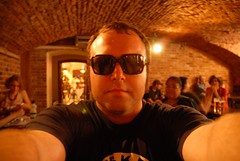

 Posts
Posts

